 Wittmann AZ
Slab Leak in Wittmann? Emergency Detection and Repair Under the Concrete
A warm floor, a water bill that doubled or the sound of water in a quiet house can mean a line is leaking under the concrete. Call dispatch and say what you notice.
CALL (623) 323-3182ALL SERVICES- Licensed and insured plumbers
- Same-day service when available
- 24/7 emergency dispatch
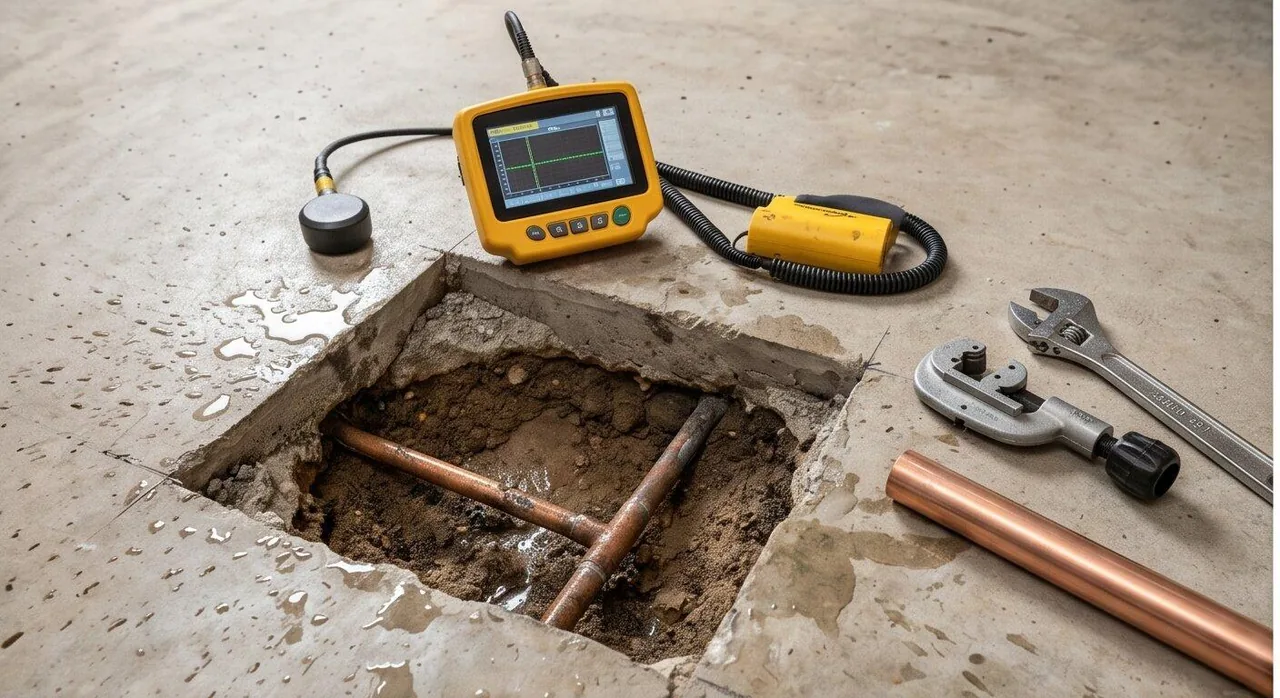
A slab leak is a break in a line that runs in or under the floor
Many homes sit on a concrete slab, and some water lines run through or beneath it. When one of those lines cracks, corrodes or loosens at a joint, the water has nowhere obvious to go. It soaks the soil under the house, climbs through cracks in the concrete or raises a warm patch on the floor above.
Homeowners with a slab need this page. So does anyone who is not sure what the house sits on. Foundation type is not something to assume in Wittmann, because it differs between properties and between builders. Check the closing paperwork. If it does not say, a plumber can often tell from a walk around the exterior and a look at the garage floor, and that answer should come before any talk of methods.
Warm floors, a spinning meter and other signs
- A floor spot that stays warm, even when the heat is off. A hot water line may be leaking beneath it.
- A meter that moves with every fixture and appliance shut off.
- The sound of running water in a silent house.
- Damp carpet, curling flooring or cracks that seem to be growing.
- Low pressure or a hot water heater that runs more often than usual.
- A musty smell near a closet or an interior wall that no cleaning removes.
- New cracks in tile or a foundation leak inspection finding damp soil at the edge of the slab.
Water at the surface? Close the main valve and turn off the water heater. Keep away from outlets and appliances standing in water. If the floor is hot to the touch, do not walk on it barefoot.
Wittmann slab leak location without guessing
Residential slab leak work comes down to one rule: do not open the wrong part of a floor. Plumbers narrow the search before anything is cut. First comes isolation. The plumber closes valves to learn which line is losing pressure, hot or cold, and whether the loss is under the house or outside it.
Then comes sound. A pressurized leak makes a hiss that travels through concrete, and a sensitive microphone on the floor finds where it is loudest. Thermal tools show a hot water line as a warm band. When two methods agree, the plumber marks the spot with paint or chalk and shows you the mark.
Ask how close the plumber expects the mark to be. A leak can sit a few feet from where the sound is loudest, and an honest answer allows for that. Ask what the plumber found on both sides of the mark. A single pinhole is a different problem from a hidden slab leak in a line that is thin along its whole length.
How is slab leak detection different from working on a wall?
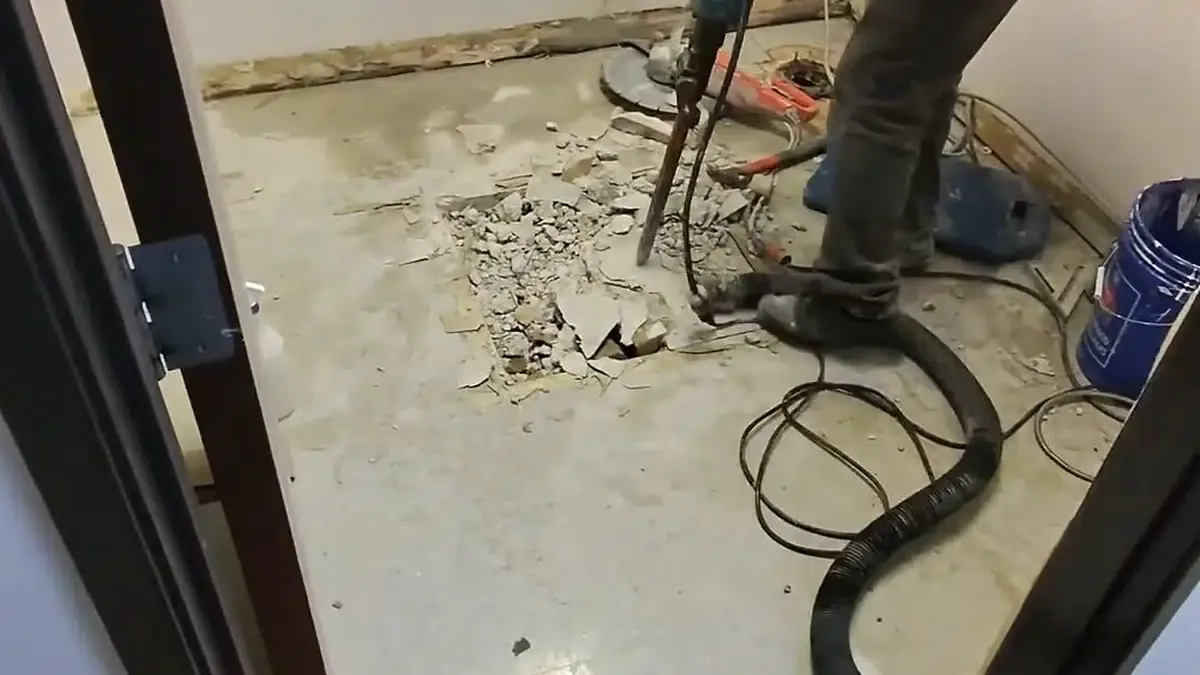
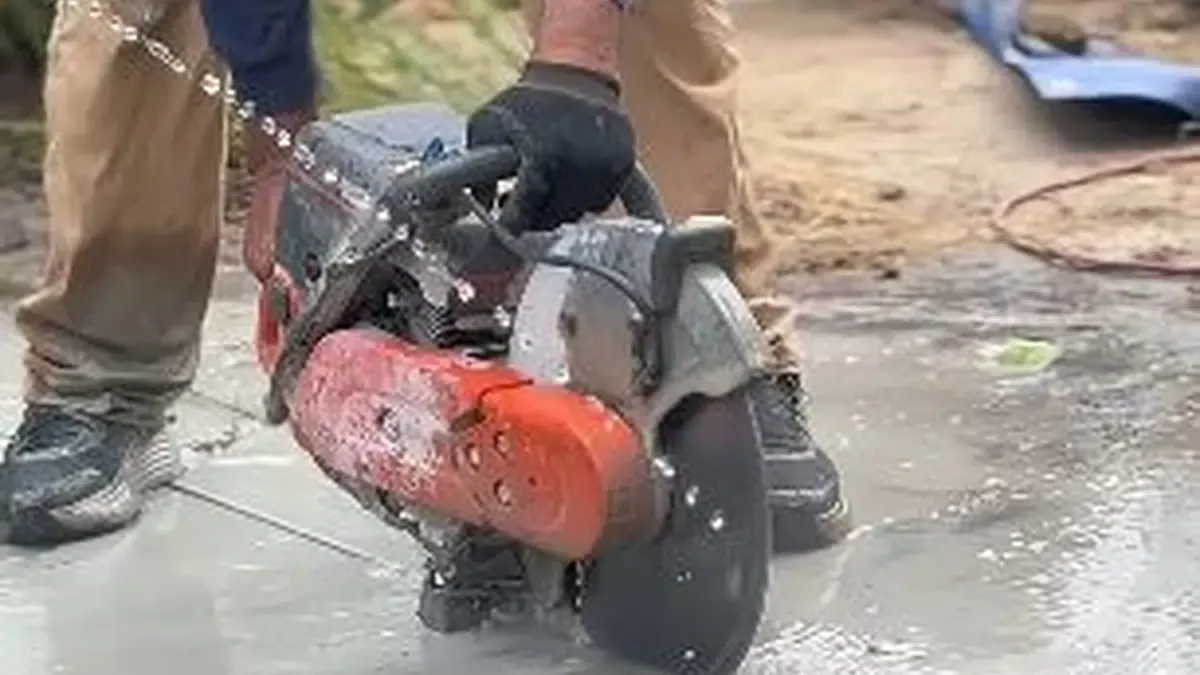
In method, little. In stakes, a lot. Behind a wall, a wrong guess costs a patch of drywall. Over a slab, it costs a saw cut, a day of dust and a flooring repair. That is why testing comes before cutting. A pressure test proves a line is leaking, listening gear narrows the area, and a second method confirms the mark.
Concrete also changes what the plumber can reach. Thick slabs carry sound differently from thin ones, and reinforcement, tile and carpet each affect the readings. Be ready to say what the floor covering is. Tell the dispatcher whether the leak seems to be near the kitchen, a bathroom or the water heater. That detail helps the plumber choose the right tools.
If you have a general question about finding other leaks, the general leak search page describes the same search for walls, yards and fixtures.
What does slab leak repair in Wittmann involve?
An underslab leak service ends with a repair method, not just a mark. Once the leak is pinned, the plumber picks a method based on the pipe and the floor. The main choices are below. None is right for every house, and a good plumber will tell you why one fits and the others do not.
| Method | How it works | Best fit | Trade-off |
|---|---|---|---|
| Reroute | A new line is run through a wall or attic and the old one is capped | Older lines with more than one weak spot | New openings in walls, but the slab stays intact |
| Spot repair through the slab | The concrete is cut open over the break and the pipe repaired | One clear leak in an otherwise sound line | Cutting, dust and floor repair afterward |
| Tunnel under the slab (trenchless) | A small tunnel is dug from outside to reach the pipe from below | Leaks near an exterior wall | Yard digging; 811 must be called first |
| Epoxy or lining | A coating is applied inside the pipe to seal it | Pipes that are sound enough to hold the coating | Not suited to every pipe or every break |
Reroute is the choice many plumbers prefer when the line has aged, because patching one spot leaves the rest. Slab leak detection and rerouting often happen in the same visit, since the location work shows how weak the rest of the line is. Spot repair makes sense when only one section has failed. The plumber should explain why before you approve the work, and should mention that the floor covering and the concrete patch are not plumbing.
Before any digging outside, someone must call 811. Arizona requires it, and it marks the buried utility lines.
Warm floor or a strange meter? Call the dispatch line.
Describe what you see and the visit is matched to it.
Does the age of the house change the risk?
Often it does. Pipes and joints wear out, and the age of the plumbing sets the odds. In Sun City West, for example, the homes were built from 1978 to 1997, so many have plumbing that is now three to four decades old. Vistancia was built mostly after 2004, so its lines are newer. For a Wittmann address, do not guess. Ask the plumber what material your lines are made of and what condition they are in.
Age alone does not mean a leak is coming. What it does mean is that one repair may not be the last. If the plumber finds the pipe thin or scaled at the break, ask about the condition of the rest of the run. That conversation can save you a second visit and a second hole in the floor. The repiping guide explains when replacing a run makes more sense than patching it.
Insurance, landlords and what to keep
Spotting a slab leak early is the best protection against the foundation issues a long-running leak can cause. Water that softens the soil under a slab can let it settle, and foundation leaks affecting stability are a reason to act quickly, not wait. The benefit of repair is that the water stops. Insurance for slab leaks depends on the policy, and some exclude damage from slow leaks. Call your insurer early, before materials are discarded, and ask what documentation they want. A plumber can write what was found and where, and photos help. Keep invoices, dates and the name of everyone you speak to.
Renters and landlords have a shorter list. The tenant reports in writing and protects the property from further damage. The owner decides who does the work. If you manage the house for someone else, tell the dispatcher so the plumber can speak to the right person.
Newer slabs are sometimes post-tensioned, with steel cables inside the concrete. Cutting one is dangerous, so the plumber needs to know if the slab has them before any cut. Ask. For slab leak insurance claims assistance, the plumber's written findings are a document an adjuster may ask for.
One more practical point: even if the leak is repaired, the slab may need to dry before flooring goes back. Ask how long the plumber expects that to take and who will check that the area is dry.
Floor warm, bill up, meter moving? Get a plumber on the phone.
The dispatcher confirms your address and the next step.
Slab leak questions, answered
How do I tell whether I have a slab leak or just a high water bill?
A hot spot on the floor or a meter that turns with every fixture off points to a leak, not to use. A bill alone does not. Compare two or three months of bills, then run the meter test: shut off all water and watch the dial for fifteen minutes. If it moves, water is escaping. A plumber then decides whether the leak is under the floor, in a wall or in the yard.
Can a slab leak be fixed without breaking up the floor?
In some cases. Start with the practical step: find out where the line runs. If the leaking pipe can be bypassed, the plumber can run a new line through a wall or attic. The old one is capped and the concrete stays in place. Spot repair requires opening the slab over the break. Epoxy or lining methods work from inside the pipe, but only when the pipe condition allows it. The plumber should name which options fit your house before work starts.
How long does it take to find and fix a slab leak?
It depends on how fast the leak is found and which repair fits. Typical steps: 1. Shut off the water and confirm the leak with a meter and pressure test. 2. Pin the location with listening gear. 3. Choose a repair method and mark the work area. 4. Make the repair, test the line and close up. Locating can take part of a visit, and a reroute or spot repair can take longer. Keep in mind that flooring and concrete finishing are separate steps after the plumbing is done.
Who handles a slab leak in a rental house?
Picture a tenant who notices a warm spot on the bedroom floor and a bill that doubled. The tenant closes the main valve if water is surfacing and tells the landlord or manager in writing, with photos and dates. The lease usually decides who authorizes the repair. Dispatch can talk through the shutoff and can speak with the owner or manager once they are reachable. A plumber can still stop the water at an unreachable owner's house, so the damage does not keep growing.
If the leak is not under the floor after all
Many suspected slab leaks end up somewhere simpler: a leaking water heater fitting, a running toilet or a break in the line from the meter. The plumber rules those in or out first. If the water is leaving the line in the yard, the water line repair page covers that part. If a heater is the cause, see water heater repair.
Once the leak is stopped, wet drywall, baseboards and flooring still need drying. That work is covered under drying out the structure. Same-day availability varies with the schedule, and the homepage describes how emergency plumber help reaches this area. Dispatch can take your address and a few details at any hour. Call (623) 323-3182.
Ready to find the leak? Call the dispatch line.
Day or night, someone answers.
- Licensed and insured plumbers
- Same-day service when available
- 24/7 emergency dispatch
- Licensed and insured plumbers
- Same-day service when available
- 24/7 emergency dispatch